Gas Line Replacement in Apex
When patching stops working, gas line replacement in Apex gives the home a completely new fuel gas system — engineered for today's appliances, installed to current North Carolina code, and proven with documented pressure testing. In a Research Triangle suburb where much of the housing stock dates to the area's fast-growth decades, replacement is often the honest answer to a system that has served well but is done being repaired.
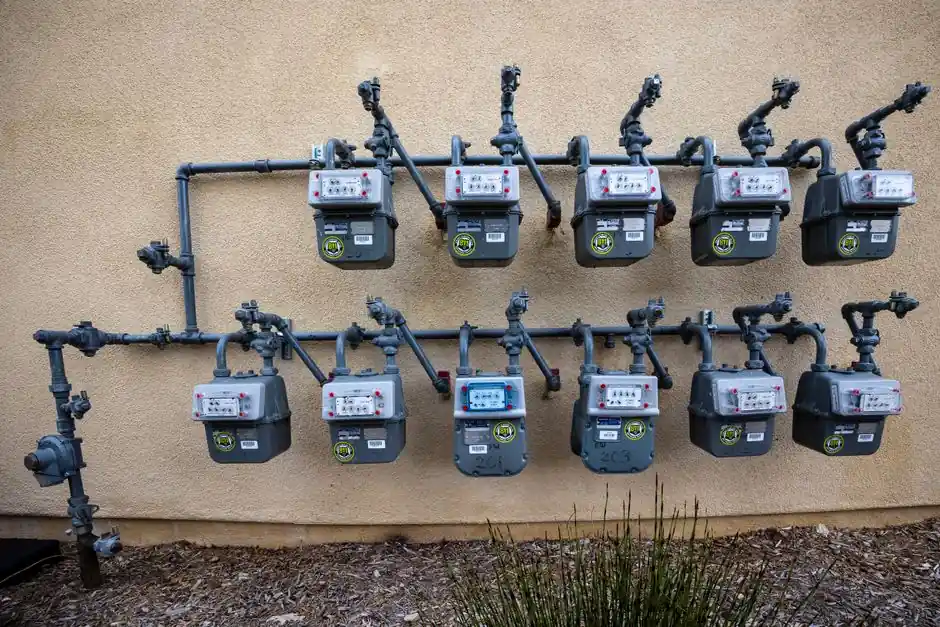
Service overview
Understanding Gas Line Replacement in Apex
Gas line replacement in Apex means taking out the old, failing, or undersized gas piping and installing a complete new system — sized from measured appliance loads, routed for the house as it exists today, and built to current code. It's not a repair; it's a renewal, and it ends the cycle of recurring failures.
Much of Apex grew fast, and the gas piping in many homes is now decades old. Black steel pipe from the growth eras, systems sized for simpler appliance lineups, and decades of Carolina clay soil contact on buried sections — the housing stock has a specific biography, and replacement is how that biography gets a new chapter.
! Common Warning Signs
Recurring leaks at different joints
When each repair fixes one spot and the next leak appears somewhere else, the piping itself is telling you it's done. Recurring failures at different locations signal systemic deterioration — the point where replacement stops being optional and starts being economical.
Visible rust and flaking on exposed pipe
Heavy scaling, flaking, or pitting on visible gas piping means wall thickness is already compromised. What you can see is the mild version of what's hidden — and when the visible pipe looks like this, the concealed pipe is rarely better.
Appliances starving for gas
Burners that run weak, a furnace that short-cycles, or a water heater that cannot keep up can all trace to undersized or deteriorating piping that can't deliver what modern appliances demand. When the whole house underperforms, the piping is the prime suspect.
Scope of Work
What's Included in Gas Line Replacement
Our gas line replacement service in Apex covers the complete renewal of the home's fuel gas system — from the meter connection to the last appliance, engineered as one coherent installation.
-
01
System assessment and sizing
Every appliance is mapped with its BTU demand, and the total developed length of the run is measured. The new system is sized from this data using longest-length method tables — real engineering, not rules of thumb.
-
02
Permit-ready planning
Replacement work is planned to North Carolina fuel gas code requirements: correct materials for each application, proper supports and protection, and the inspection and testing the code demands. The new system isn't just new — it's current.
-
03
Complete pipe renewal
Old piping is removed in sequence and new pipe is installed along the best available route — often improved over the original, which was routed for a different era's house. Every joint, every support, every penetration done to current standards.
-
04
Appliance reconnection and testing
Every appliance is reconnected with its own shutoff and drip leg, the full system is pressure tested with zero allowable drop, and each appliance is commissioned and demonstrated. You get a new system, proven and documented.
Benefits of Full Gas Line Replacement
Replacement ends the cycle of repeat repairs, brings the entire system up to current code, sizes the piping for your actual appliances (not the 1990s lineup), and gives you documented proof of integrity. It's the project that turns a worried-about gas system into a forget-about-it one — and in a town where homes are major investments, that documentation has real value at resale.
Contact us nowTools and Methods We Use
Pipe sizing charts
Longest-length method tables that convert total BTU load and developed run length into the correct pipe diameter for every section. The math that ensures every appliance gets full pressure, even at simultaneous full load.
Pressure test gauges
Calibrated gauges that verify the new installation holds test pressure with zero drop before gas flows. The new system is proven tight before it's commissioned — no exceptions.
Combustible gas detector
Electronic detection that confirms every new joint, valve, and connection is leak-free after installation. The gauges prove the system; the detector verifies every joint individually.
Pipe threading equipment
Power threading that cuts clean, precise threads on steel pipe for strong, code-compliant joints. Good threads are the foundation of a steel gas system — we cut them right.
Local execution
Gas line replacement in Apex has to account for how homes here were actually built. In the growth-era subdivisions, gas lines were often run for speed — adequate for the original appliance package, minimal for anything more. Replacement is the chance to do it properly: correct sizing, better routing, modern materials, and the documentation the original never had.
We also plan around how Apex households use gas now versus when the home was built. A house piped for a standard range and water heater now hosts a pro-style range, a tankless unit, and an outdoor kitchen — the replacement sizes for the household as it lives today, with headroom for what's next.
Neighborhoods we serve around Apex
- • Friendship
- • Salem Street
- • Copper Ridge
- • Downtown Apex
- • Downtown Apex area
Before & After
When Replacement Beats Repair in Apex
The question behind every replacement estimate is where one more repair stops making sense — and the answer is arithmetic as much as judgment. Add up the recent repair costs, factor the system's age and condition, consider what the next five years likely hold, and compare against a single renewal project. When the repairs are frequent, the system is old, and the piping is undersized for modern loads, replacement wins on both economics and peace of mind.
The age of the local housing stock makes this a common decision. Homes built from the 1980s through the early 2000s are hitting the window where original gas systems show their age — not all at once, but steadily. The homeowners who choose replacement deliberately, on their schedule, consistently fare better than those forced into it by a failure.
There is real value in choosing replacement deliberately instead of being forced into it by an emergency. Planned replacement means competitive scheduling, thoughtful routing, coordination with other projects, and no crisis premium. Emergency replacement means all of that in reverse. When the inspection says the system is nearing the end, the smart move is to plan the renewal.
Replacement is also the moment to future-proof. Households add gas appliances over the years — the outdoor kitchen, the generator, the pool heater — and a replacement sized with headroom accommodates them without another major project. Tell us the five-year plan during the assessment; the incremental cost of capacity now is far less than a second project later.
- ▸ Recurring leaks at different locations signal systemic pipe failure rather than isolated problems — the pattern that says replacement, not another repair.
- ▸ Widespread visible corrosion means wall thickness is compromised beyond what spot repairs can address — renewal is the honest answer.
- ▸ Undersized piping starves modern appliance loads and cannot be corrected without replacing the run — sizing is destiny, and replacement resets it.
- ▸ A planned replacement disrupts the household less than repeated urgent repairs spread over years — one project versus a career of callouts.
Planning a Replacement in Apex
One Project, a Fully Renewed System
Replacement is a bigger decision than a repair, so the planning phase gets real attention. We assess the existing system, calculate the loads, plan the routing, coordinate the schedule around your household, and quote the complete project plainly — so you decide with full information, not sales pressure.
Most single-family replacements in the Apex area are completed in a focused work window once planning is done — the disruption is real but bounded, and the gas is back on with a new, documented system. We'll give you the honest timeline during planning.
What to Expect During Gas Line Replacement
Load calculation and routing
Every gas appliance is inventoried and total BTU demand is calculated against the developed run lengths. The engineering comes first — the new system is designed before the old one is touched.
Old line isolation
Gas is shut off at the meter and the old piping is depressurized before removal begins. Safe isolation first, then the old system comes out in sequence as the new one goes in.
New pipe installation
New piping goes in along the planned route with supports at proper intervals, sleeving at penetrations, and protection where required. Every joint made to code, every section installed like it will be inspected — because it will be.
Testing and restoration
The complete system is pressure tested with zero allowable drop, every joint is leak-checked with electronic detection, and each appliance is reconnected, commissioned, and demonstrated. You get the test records and the walkthrough.
Understanding Gas Line Replacement Cost Factors
The scope of a gas line replacement in Apex varies widely from home to home. Rather than flat pricing, the honest factors:
Total length and routing
Longer runs and difficult routing through finished walls, attics, or concrete add labor and material. The house's layout shapes the project's scale — we measure it during assessment, not guesswork.
Number of appliances
Each appliance connection means a branch line, its own shutoff, and a drip leg. Homes running many gas appliances need more distribution piping — the count matters, and we inventory every one.
Material and trenching needs
Underground sections may require trenching through the clay and rocky soils common around Apex — which adds excavation work. The material choice (steel, CSST, PE for underground) follows the application and the code.
Why Plan Replacement With Us
Replacement is a significant project and deserves to be planned like one. We size the system from measured loads, route it for your house as it exists, install to current North Carolina code, pressure-test with zero allowable drop, and document everything. The result is a gas system you don't think about — which is exactly what a gas system should be. In a town where homes are investments, that documentation is part of the return.
Call (984) 246-1060Frequently asked questions
How do I know if I need replacement or just repair?
The pattern decides: recurring leaks at different locations, widespread visible corrosion, or piping undersized for your appliances all point to replacement. A single isolated failure in an otherwise sound system points to repair. Our assessment gives you the honest read — we recommend repair when repair is right, because a contractor who only sells replacement can't be trusted to diagnose.
How long does gas line replacement take?
Most single-family replacements complete within a focused work window once planning is done — typically days, not weeks, depending on the system's size and routing complexity. We'll give you the honest timeline during the planning phase, including how long the gas will be off and what to expect for heat and hot water in the meantime.
Will replacement require tearing up my house?
Less than you'd fear. We plan routing to minimize disruption — using accessible paths, existing chases, and strategic openings rather than wholesale demolition. Finished spaces get surgical openings with restoration; unfinished spaces (attics, crawl spaces) carry most of the new runs. We'll walk you through the routing plan before work begins so there are no surprises.
Is the new system up to current code?
Yes — replacement is designed and installed to the current North Carolina fuel gas code: correct materials, proper supports and protection, required testing, and inspection sign-off. The documentation package proves it. A replaced system isn't just new; it's current in a way the original may never have been.
Can I add capacity for future appliances during replacement?
Absolutely — and it's the smartest time to do it. Sizing the new system with headroom for the outdoor kitchen, generator, or pool heater you might add costs little incremental now versus a separate project later. Tell us the five-year plan during assessment and we'll engineer for it.
Related services
Gas Line Repair
Targeted repairs for isolated leaks, faulty valves, and damaged sections, when the rest of the system is sound and worth keeping — the surgical alternative to full replacement.
Gas Line Pressure Testing
Standalone verification testing that confirms a new or existing line holds pressure with zero drop — the proof that inspectors, buyers, and utilities accept.
Get Reliable Gas Line Replacement in Apex Today
Stop patching the same failing line. Contact us to plan a full, code-compliant replacement in Apex — assessed honestly, engineered correctly, and proven with testing. One project, decades of certainty.